
A Note on Regeneration
And how aggregation of the past may help us better understand what it will take to innovate for the consumer.

Last month X announced the launch of their Handle Marketplace, available today for Premium Business accounts and soon for Premium+ accounts (calling all prosumers!).
Just so we’re all on the same page here, the mechanics of the marketplace are as follows:
Premium Business accounts can explore and request eligible inactive handles
Handles are cataloged as 1) priority, or 2) rare where priority includes full names, multi-word phrases, or alphanumeric combinations and rare are defined as short, generic, or culturally significant names
Priority handles can be requested at no additional cost as a benefit tied to the account subscription (your previous handle is frozen in the meantime)
Rare handles, on the other hand, are accessible either in 1) public drops, or 2) direct purchases where the former will be selected by engagement/ reach on X and intended use of the handle, and the latter is invitation-only (who gets to join this inner circle?) with fixed pricing and permanent post-purchase regardless of if your subscription ends
X prevents disintermediation i.e. can I transfer my handle to someone off platform? through account suspension
Rare handles are rare for a reason — they could be priced anywhere from $2.5k to $1M (which begs the question, what % cut does X get?)
And if the handle you’re looking for isn’t available, you can join the Watchlist to be notified at a future date
As far as marketplace dynamics go, the model feels pretty comprehensive. Rare handles are the sleeping giant in this initiative (extra revenue line) so I’m intrigued to see what a rare handle drop event looks like. I hope/ suspect rare handle values are generated by some pricing engine, but I’d be curious to know what the inputs are that drive asset value for “popularity of word” and “cultural significance”. What happens when rare handles fall out of cultural favor — what happens to a @delulu or @pmo?1
How X “lists” handle types presents an interesting assessment of human behavior: convenience can be reached through some urgency/ agency (request the handle!), while rarity is ultimately scarce (there’s only so many words in the English language) and so we must bid for access. Naturally, when most of the tech community speaks of inching closer to the promise of infinite supply markets, where expert data labeling has become the new mode of “marketplace”2, I find myself stuck on the scarcity of rare X handles.
If we believe handles to hold digital identities, rare handles serve as a metaphor for the value of persistent human identity and memory. And over time, generations of public aggregation have driven personal fragmentation. Let’s dig in.
The Physical Marketplace
My earliest commercial association with the “marketplace” is around the department store, an aggregation of physical goods in one location. The late 19th century saw the formality of commerce where, for the first time, women, synonymous with consumers at the time, became visible in public space.
Sure, not all took seriously the role of the shopper:
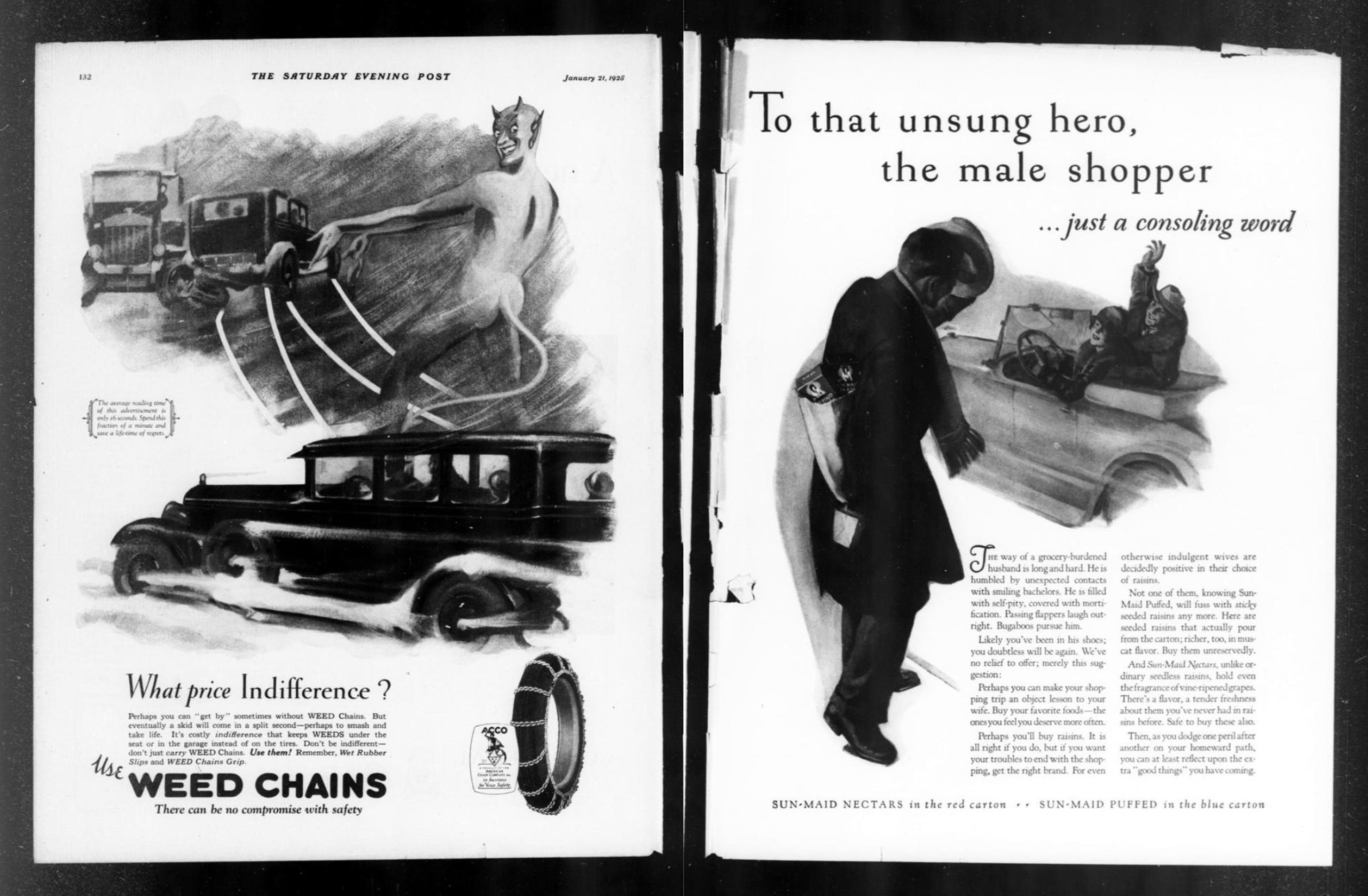
To consume does etymologically mean to waste. But even its seeming frivolity, the structural innovation of publicly shopping in one place allowed women to choose what they wanted with intention.3
Digital Marketplaces
Web2 of the 2000s made way for transformational aggregation where digital convenience took center stage. And marketplace structures that once made the consumer a newly visible yet singular identity were now creating pools of identities, niche distributed communities that built trust online. eBay’s founder first sought out Pez dispenser collectors in an attempt sell his then-fiancee’s stash. Amazon was famously an online bookstore. Etsy’s founder was a disgruntled woodworker who had struggled to sell his furniture, among other things.4
Over time, layering on discovery, ratings, payments has helped consumers better choose at speed. Financing, insurance, seller tooling ie. bookings, boosted listings has incentivized sellers to grow on platform. There’s probably few niches of marketplace supply I haven’t seen.
So what’s next?
I was reminded of niche supply the other day as I was flipping through eight pages of apps on my trusty iPhone 13 (that I am carefully willing on). The distribution of convenience has meant that we now exist across a multitude of platforms. And so, in an effort to build again for the consumer, we must look inwards. Re-aggregating the consumer across contexts means that AI can hyper-personalize, expanding beyond what we consume to how we decide to consume. Think of the individual as the system of record where identity is portable, continuous, cumulative, where our handle persists, even when we’re not paying for it at a premium.
Alternatively, perhaps these TikTok terms aren’t culturally significant enough at all.
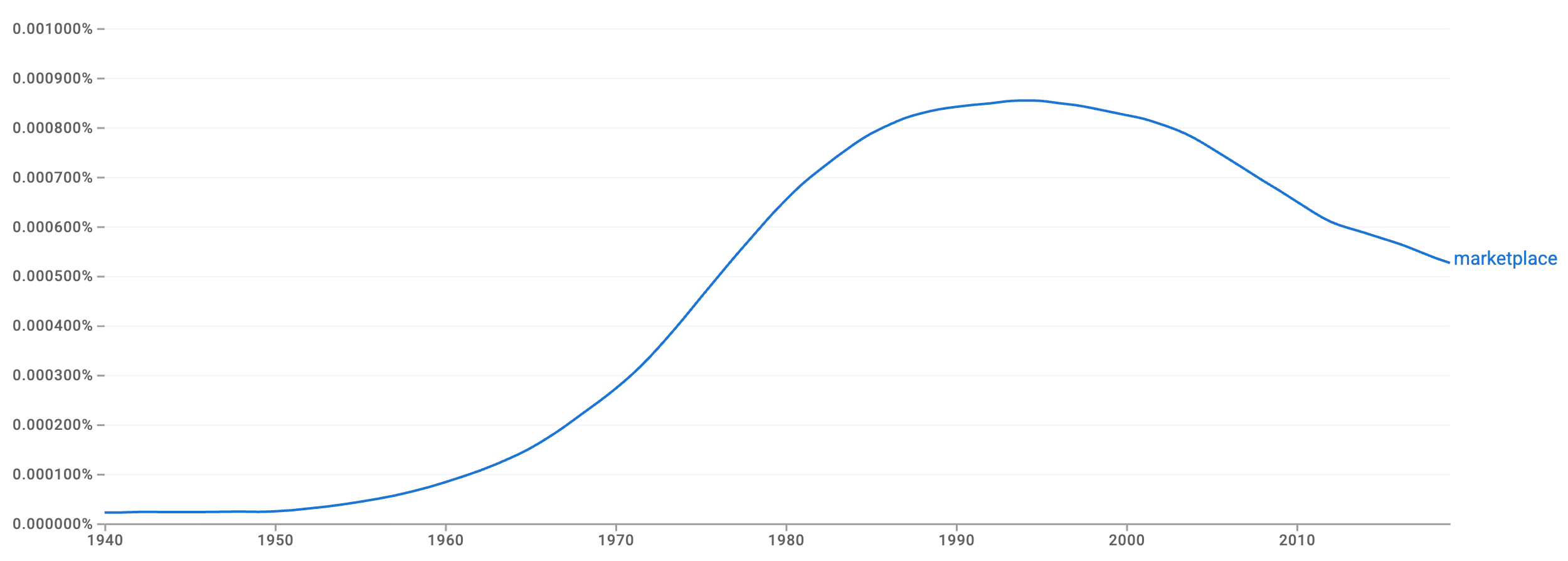
Did you know peak “marketplace” usage in digitized books was pre-2000? Should caveat that I have no idea what gets included in this Google Books corpus data.
The frugal consumer emerged as an archetype in response to the underlying assertion that consumer-hood was trivial. This is a great archive on the, perhaps somewhat depressing, albeit progressive-at-the-time perspective on the consumer as empowered.
Inside-out computers encased in wood with transparent tops? You can read more here.
Didn't expect to be pondering the economics of digital real estate this morning. Your insightful analysis makes me wonder, could this push for 'rare' handles change the very fabric of user interraction on the platform long-term?